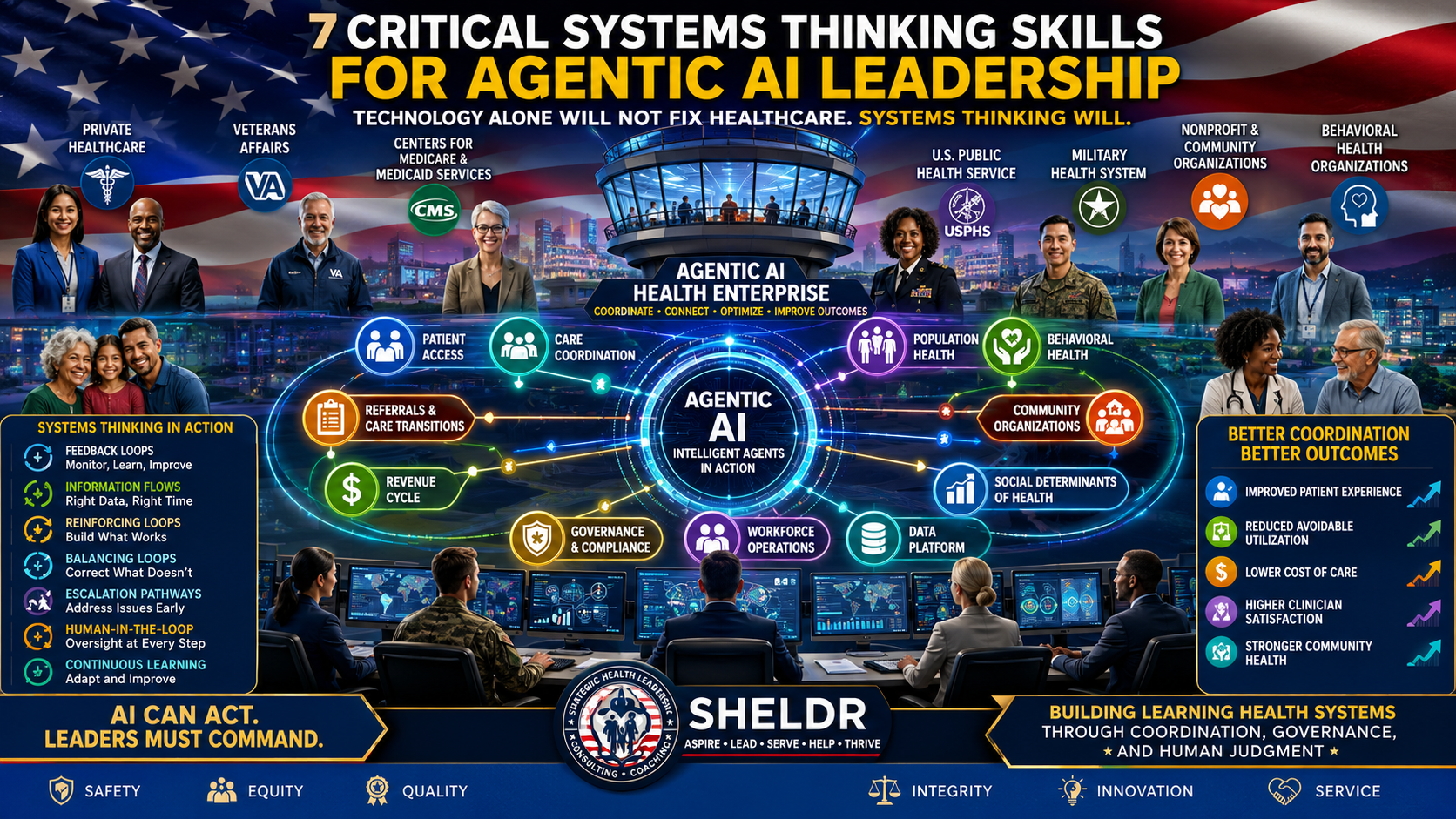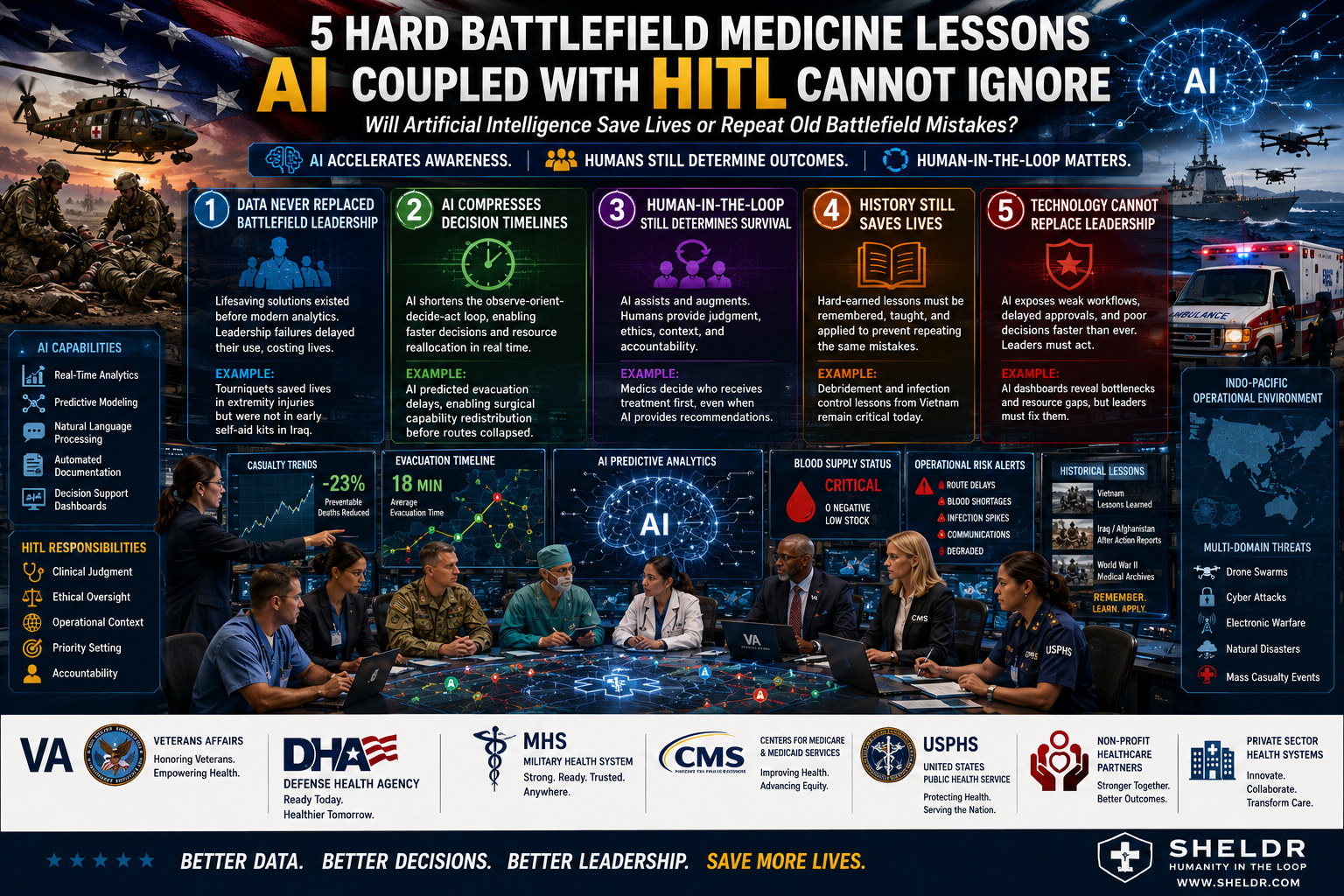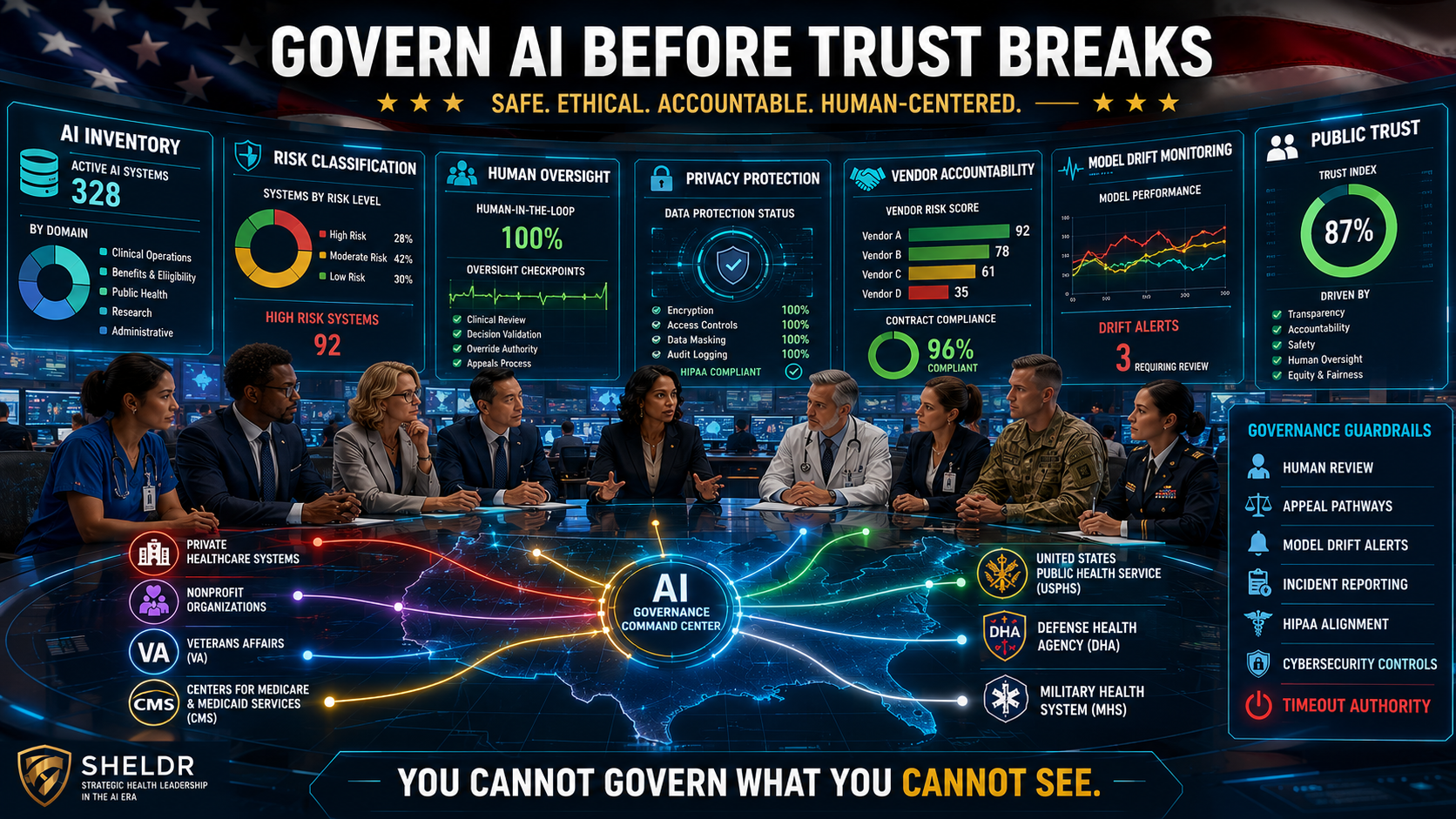
How do you safely shift from tech experiments to reliable health outcomes?
Introduction to the AI VALUE Framework
Navigating the implementation of Artificial Intelligence in health and human services often mirrors assembling a high-speed engine while the vehicle is already in motion. Consider this scenario:
Imagine building a complex railway system: if you lay down the tracks without understanding the terrain, the trains will derail.
Evaluating Projects: The AI VALUE Framework
In Dr. Aris’s scenario, the AI failed on the workflow integration and usability fronts, meaning its theoretical accuracy was practically useless. Before scaling any AI initiative, you must evaluate its core dimensions.
As part of my research, I found and developed a framework: AI VALUE framework. The VALUE acronym offers a comprehensive rubric: Viability and workflow fit, Accuracy and safety, Legal and ethical compliance, Usability and trust, and Economic efficiency.
The VALUE Framework is a practical blueprint for assessing and executing AI initiatives in healthcare, ensuring they are safe, effective, ethical, and financially sound. Similar evaluation rubrics are widely utilized by health systems and digital medicine organizations.
Core Criteria for AI Projects: The AI VALUE Framework
| Dimension | Description | Focus Areas |
| V – Viability | Does the technology work safely and fit into the existing infrastructure? | Technical accuracy, data pipeline stability, and electronic health record (EHR) integration capabilities. |
| A – Alignment | Does the project solve a real clinical or operational problem? | Alignment with organizational strategy, mitigating staff burnout, and addressing defined end-user needs. |
| L – Legitimacy | Are ethics, data privacy, and regulatory compliance prioritized? | Adherence to the NIST AI Risk Management Framework, FDA approvals, and patient privacy protections. |
| U – Usability | Can the end-user (clinicians or administrative staff) actually use the tool? | Intuitive human-AI interfaces, proper staff training, and preserving human-in-the-loop oversight. |
| E – Economics | Does the project demonstrate a clear, measurable return on investment? | Cost-efficiency, reducing administrative waste, and measurable payback periods. |
Evaluating and selecting successful AI projects requires a focused, multi-dimensional approach to ensure sustainable, secure, and impactful outcomes. Using the VALUE acronym allows leaders to screen for criteria that drive true clinical and administrative improvements.
By enforcing the VALUE framework, leaders systematically filter out unsustainable point solutions.
Why Adoption Matters in Modern HHS
The need for augmented intelligence has never been more pressing. Recent industry data shows that while enterprise AI adoption has spiked to 88% globally across organizations, merely 39% of those organizations report a significant EBIT (earnings before interest and taxes) impact.
Furthermore, the AI Incidents Database reveals a 56.4% spike in AI-related problems, ranging from bias to dangerous hallucinations. For HHS leaders, this matters because misaligned AI not only drains scarce financial resources but directly compromises patient outcomes and health equity.
What Health Leaders Should Do Next
First, leaders must establish multidisciplinary governance committees—bringing together clinicians, ethicists, and data scientists—to oversee all AI development. Second, you should prioritize “Value-First” use cases targeting repetitive, high-friction pain points like billing automation or clinical documentation. See framework below for initial screening. Transitioning from these small, proven pilot programs to broader, modular capabilities guarantees sustainable ROI.
| Framework Criteria | Primary Focus | Practical Application in HHS |
| Viability | Workflow and environment | Testing whether AI reduces, rather than increases, charting time. |
| Accuracy | Clinical and predictive metrics | Validating the tool against historical datasets for bias. |
| Legal | Privacy and security | Ensuring the AI complies with HIPAA and protects PII. |
As AI matures, many organizations completely ignore the emerging necessity of Continuous Evaluation and Algorithmic Auditing. AI models continuously “drift” as they process dynamic, real-world data. Health leaders must plan for include training the healthcare workforce to be “AI-literate” and ensuring that patients have a transparent understanding of when AI is assisting in their care decisions.
Conclusion and Call to Action
Artificial intelligence holds the immense potential to revolutionize health and human services, but it demands strict operational discipline. As we look toward the future of value-based care, your call to action is to take immediate control of your AI strategy by instituting the VALUE framework, rigorous governance, and continuous human oversight.
It is time to ensure the technology works for our people, rather than our people adapting to unpredictable technology.
Learn more: Agentic AI: 6 Urgent Organizational Governance Actions to Manage Agentic AI Such as OpenClaw Risks
Discussion Questions
Understanding the implications of advanced technology is crucial for today’s healthcare landscape.
- How can your organization establish a “fail fast, learn faster” pilot program that safeguards patient safety?
- What training gaps exist in your current workforce regarding AI literacy, and how can you close them?
- How do you ensure that marginalized communities are not disproportionately disadvantaged by algorithmic bias in AI-driven care?
References
- McKinsey & Company. The State of AI in 2025/2026: Expansion and Challenges. McKinsey & Company; 2025. Available: https://www.mckinsey.com/capabilities/quantumblack/our-insights/the-state-of-ai
- Stanford University. The AI Index 2025 Annual Report. Institute for Human-Centered Artificial Intelligence (HAI); 2025. Available: https://hai.stanford.edu/ai-index/2025-ai-index-report
- National Center for Biotechnology Information (NCBI). Leveraging AI-enabled learning health systems to advance value-based health care. Health Affairs. 2026. Available: https://pubmed.ncbi.nlm.nih.gov/41661176/
- American Medical Association (AMA). AI can support value-based care, but challenges must be addressed. AMA Journal. 2024. Available:
https://www.ama-assn.org/practice-management/digital-health/ai-can-support-value-based-care-challenges-must-be-addressed - Menlo Ventures. The State of AI in Healthcare 2025: Clinical and Operational Trends. Menlo Ventures; 2025. Available: https://menlovc.com/perspective/2025-the-state-of-ai-in-healthcare/
- Sendak M, Balu S, Schulman K. Building effective artificial intelligence strategies in health care. NPJ Digit Med. 2025;8:Article 147. Available at: https://pmc.ncbi.nlm.nih.gov/articles/PMC12023651/
- Garrison LP Jr, Towse A, Briggs A, et al. Value assessment frameworks for health technology decision making: considerations for artificial intelligence and digital innovation. Value Health. 2023;26(12):1725-1733. Available at: https://www.valueinhealthjournal.com/article/S1098-3015(23)03025-5/fulltext
- London School of Economics and Political Science. Evaluation Framework for Health Professionals: Digital Health and Artificial Intelligence Technologies. Published 2024. Available at: https://www.lse.ac.uk/business/consulting/assets/documents/Evaluation-framework-for-health-professionals-digital-health-and-AI-technologies.pdf
- Umbrex. AI Value Creation Framework. Published 2025. Available at: https://umbrex.com/resources/frameworks/strategy-frameworks/ai-value-creation-framework/
- Digital Medicine Society. Building the Business Case for Digital Endpoints: Value Framework. Published 2024. Available at: https://dimesociety.org/building-the-business-case-for-digital-endpoints/value-framework/
- Workday. Fix Your AI Strategy: A Framework for Enterprise Value. Published 2025. Available at: https://www.workday.com/en-us/perspectives/ai/fix-your-ai-strategy.html
- OnStrategy. Artificial Intelligence Strategic Planning Framework. Published 2025. Available at: https://onstrategyhq.com/resources/ai-framework/
- Stanford Online. 4 Steps to Building an Effective AI Strategy. Published 2025. Available at: https://online.stanford.edu/4-steps-building-effective-ai-strategy
- OneTrust. Navigating the National Institute of Standards and Technology Artificial Intelligence Risk Management Framework With Confidence. Published 2025. Available at: https://www.onetrust.com/blog/navigating-the-nist-ai-risk-management-framework-with-confidence/
- Phoenix Strategy Group. Artificial Intelligence Risk Management Frameworks for Compliance. Published 2025. Available at: https://www.phoenixstrategy.group/blog/ai-risk-management-frameworks-for-compliance
- Intuition Labs. Risk-Based Artificial Intelligence Validation in Pharma: Applying International Council for Harmonisation Q9 Principles. Published 2025. Available at: https://intuitionlabs.ai/articles/risk-based-ai-validation-pharma-ich-q9