Are your leaders solving problems or creating dependency?
Executive Summary: Health and Human Services (HHS) leaders face workforce fatigue, burnout, operational overload, and constant change. Traditional command-and-control leadership often weakens adaptability and accountability. Coaching-oriented leadership offers a stronger path. Structured coaching models help teams solve problems independently, communicate more effectively, and build resilience. Artificial Intelligence (AI) now offers a powerful capability, helping leaders rehearse conversations, analyze communication habits, and improve coaching consistency while preserving human judgment.
Introduction to the Coaching Models
A behavioral health director sits in another staffing meeting. Two supervisors complain about overwhelmed employees, rising documentation backlogs, and declining morale. One manager responds by giving more instructions. The other pauses and asks three questions: “What is creating the bottleneck? What options have you already considered? What support do you need to move forward?” The conversation changes immediately. Ownership shifts back to the team.
That difference captures the essence of coaching leadership.
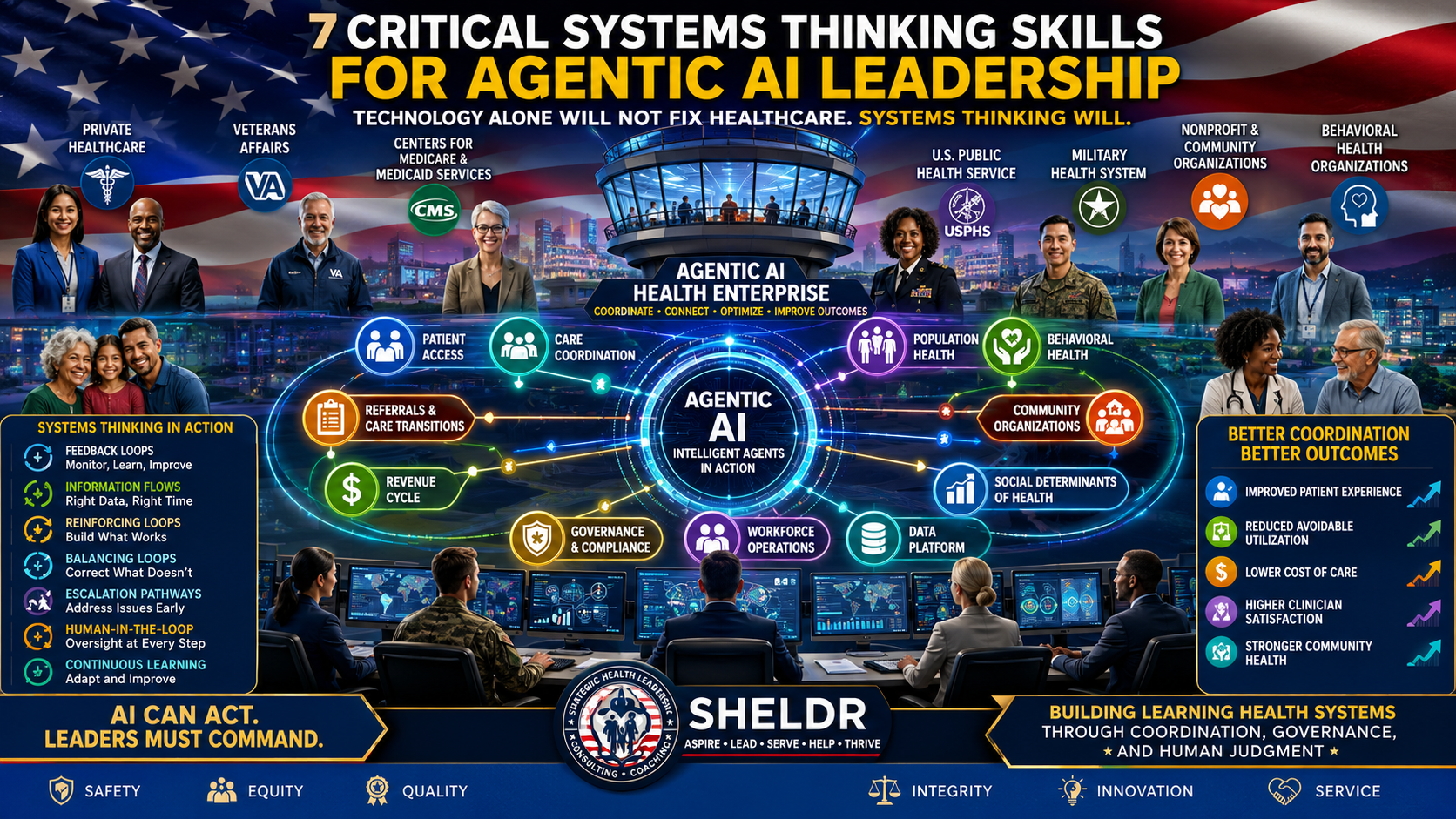
Healthcare increasingly resembles an air traffic control tower during a thunderstorm. Information floods the system from every direction. Leaders who try to control every decision eventually become the bottleneck themselves.
Coaching changes the operational model. Structured coaching frameworks help leaders build stronger thinking under pressure.
Why Coaching Now Defines Modern HHS Leadership
Coaching in HHS differs from traditional supervision because the leader guides thinking instead of prescribing every solution. Coaching represents a collaborative leadership approach that helps employees clarify goals, evaluate options, strengthen judgment, and commit to action.
The process remains non-directive but highly structured. Rather than rescuing employees or micromanaging decisions, coaching leaders create conditions where staff solve problems more independently.
This approach matters because HHS systems operate under constant stress. Burnout, staffing shortages, regulatory complexity, emotional exhaustion, and workflow overload continue to challenge organizations nationwide. A 2024 workforce review identified burnout and instability in retention as persistent operational threats across healthcare systems.
Coaching improves communication, resilience, accountability, and ownership. It also strengthens interdisciplinary collaboration, which remains critical across hospitals, behavioral health systems, Veterans Affairs facilities, Military Health System organizations, nonprofit agencies, and Centers for Medicare & Medicaid Services programs.
Coaching helps leaders build independent thinkers instead of dependent employees. That distinction increasingly separates resilient organizations from struggling ones. Structured frameworks help operationalize coaching consistently across organizations.
6 Coaching Models That Build Stronger Teams
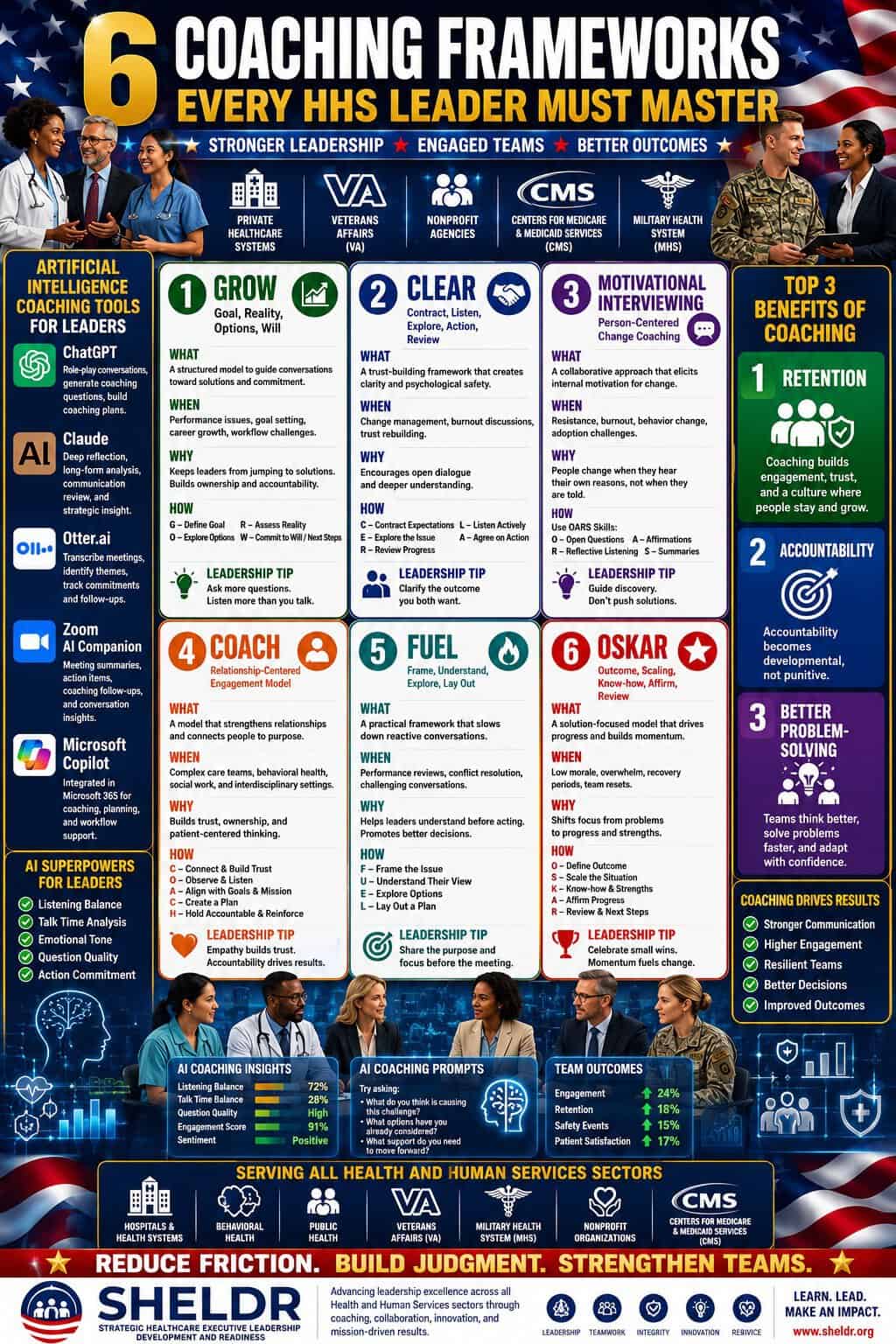
Health leaders need coaching methods that fit operational reality, not abstract leadership theory. Different workforce situations require different coaching approaches. Some frameworks improve accountability. Others strengthen resilience, trust, motivation, or communication during periods of stress, burnout, conflict, or organizational change. Strong coaching rarely happens accidentally. Structured frameworks such as those in Table 2 improve consistency, trust, accountability, and communication quality.
Table 1. Six Coaching Frameworks for High-Stress HHS Environments
| Framework | What | When to Use | Why It Works | How It Works | Practical Tips |
| GROW | Goal, Reality, Options, Will | Performance issues, career growth, workflow problems | Prevents leaders from jumping straight into advice mode | Defining goals, assessing reality, exploring options, committing to action | Spend more time exploring “Reality” and “Options.” |
| CLEAR | Contract, Listen, Explore, Action, Review | Change management, burnout discussions, and trust rebuilding | Builds psychological safety and reflective thinking | Set expectations, actively listen, explore root causes, define actions, review progress | Clarify desired outcomes early |
| Motivational Interviewing (MI) | Person-centered change coaching | Resistance, burnout, behavior change, and adoption problems | Builds internal motivation instead of compliance | Use OARS: Open questions, Affirmations, Reflective listening, Summaries | Avoid “telling.” Guide self-discovery |
| COACH | Relationship-centered engagement model | Complex care teams, social work, behavioral health | Strengthens ownership and patient-centered thinking | Create plans, observe, connect goals to the mission, and reinforce effort | Balance empathy with accountability |
| FUEL | Frame, Understand, Explore, Lay Out | Performance reviews, one-on-ones, and conflict | Slows down rescue behavior and builds judgment | Define issue, understand perspective, explore solutions, commit to plan | Share the meeting focus beforehand |
| OSKAR | Outcome, Scaling, Know-how, Affirm, Review | Low morale, overwhelmed teams, and recovery periods | Focuses attention on progress instead of failure | Define outcomes, assess scale, identify strengths, affirm wins, and review next steps. | Build momentum through small wins. |
The frameworks differ in structure, but they share one common objective: helping teams think more independently under pressure.
The GROW model remains one of the most widely used frameworks. Leaders guide employees through Goal, Reality, Options, and Will. The framework works especially well during performance coaching and career development conversations.
CLEAR focuses heavily on trust-building through Contracting, Listening, Exploring, Action, and Review. It works particularly well during discussions on organizational change and burnout recovery. Motivational Interviewing helps employees resolve ambivalence. Leaders use reflective listening and open-ended questions instead of pressure or confrontation. Behavioral health organizations frequently apply this approach.
The FUEL framework slows managers down before they rush into rescue mode. Leaders frame the issue, understand the current situation, explore options, and Lay out a success plan. OSKAR shifts attention toward solutions and progress instead of failure. This model helps overwhelmed teams regain momentum during stressful periods.
The COACH framework supports complex care coordination and relationship-centered leadership across interdisciplinary environments.
Frameworks create a repeatable coaching discipline. They help leaders avoid reactive communication and improve consistency in workforce development. AI now expands coaching capabilities dramatically.
AI Is Reshaping Leadership Coaching
AI is rapidly becoming a leadership rehearsal and reflection tool. The SHRM reports that forward-looking HHS leaders now use AI to strengthen communication habits, prepare for difficult conversations, improve listening discipline, and reinforce coaching consistency across teams and organizations. Table 2 summarizes AI-supported coaching applications.
Table 2. Practical AI Applications for Leadership Coaching
| AI Use Case | Example |
| Role-play simulations | Practice difficult employee conversations |
| Coaching feedback | Analyze whether the leader talked too much |
| Meeting summaries | Capture themes, commitments, and follow-ups |
| Question generation | Build open-ended coaching questions |
| Burnout detection | Identify emotional patterns in communication |
| Framework guidance | Generate GROW or CLEAR-based agendas |
These capabilities create operational advantages, but they also introduce governance, trust, and privacy concerns leaders cannot ignore. No single AI platform solves every leadership challenge. Some tools support reflection and analysis. Others strengthen workflow integration, communication review, behavioral insights, or coaching simulations. Leaders should evaluate tools based on mission need, workforce trust, interoperability, and governance requirements.
AI can help leaders practice coaching, such as role-playing, just as pilots use simulators before flying missions. The safest place to improve communication is before the real conversation begins. Table 3 summarizes a few recommended AI tools for coaching leaders:
Table 3. Recommended AI Tools for Coaching-Oriented Leaders
| Tool | Best Use |
| OpenAI ChatGPT | Role-play, coaching questions, coaching plans |
| Anthropic Claude | Long-form reflection and leadership analysis |
| Microsoft Copilot | Workflow coaching inside Teams and Office |
| Otter.ai | Session transcription and communication review |
| Zoom AI Companion | Meeting summaries and coaching follow-up |
| Cloverleaf | Behavioral coaching insights |
| Better Up | Leadership development and coaching support |
Technology alone will not improve leadership communication. Leaders still must develop emotional intelligence, listening discipline, and human-centered judgment.
Tools like OpenAI ChatGPT and Anthropic Claude can simulate difficult employee conversations, generate coaching questions, and structure one-on-one agendas using GROW or CLEAR models. Meeting transcription systems like Otter.ai and Zoom AI Companion allow leaders to review listening patterns, interruption frequency, and conversational balance.
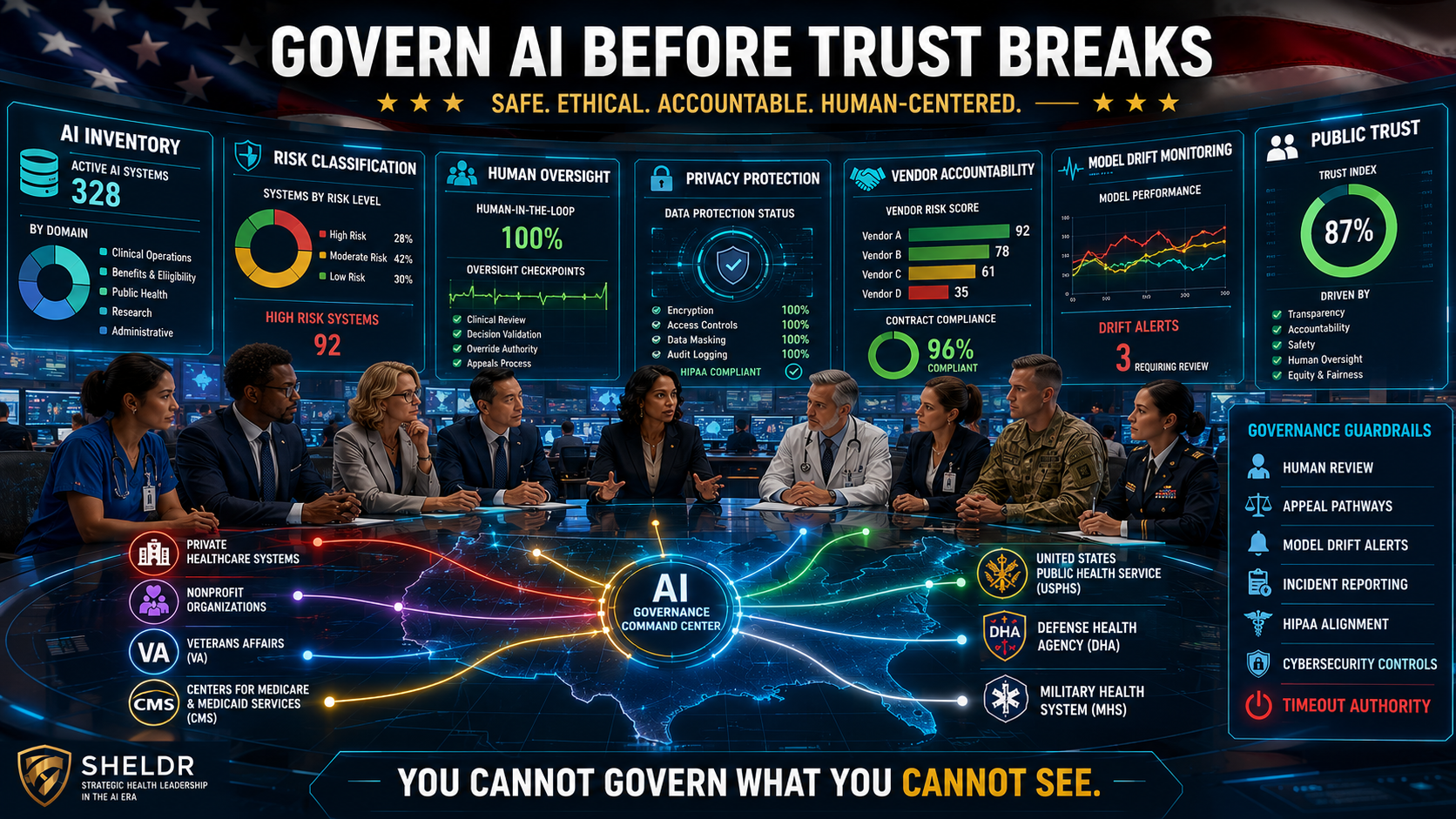
These tools create opportunity and risk simultaneously. Organizations must establish governance rules before analyzing workforce conversations. Privacy, informed consent, psychological safety, and data stewardship matter deeply. Coaching data should strengthen leadership development, not create surveillance systems. The most dangerous mistake involves replacing judgment with automation. AI should reduce friction, not replace human leadership accountability.
AI can strengthen coaching effectiveness when organizations protect trust, privacy, and human judgment throughout implementation. Emerging workforce trends make coaching even more strategically important.
5 Disruptive Leadership Trends HHS Leaders Cannot Ignore
AI is about to change leadership accountability in HHS. According to the SHINGO Institute, weak communication, poor listening, reactive management, and workforce disengagement often go unnoticed behind titles and performance reports. That era is ending. AI-driven coaching analytics, workforce expectations, and operational pressures are pushing leadership behavior into full view across the organization.
Table 4 describes several disruptive workforce and governance trends that are converging. The United States Distance Learning Association (USDLA) reports that AI-enabled communication analysis, burnout pressures, generational workforce shifts, and accountability demands are redefining leadership expectations across HHS systems.
Table 4. Emerging Coaching and AI Risks Facing HHS Leaders
| Emerging Issue | Why It Matters | Leadership Risk | Strategic Opportunity |
| AI May Expose Weak Managers | AI transcript analysis can identify interruption rates, directive behavior, emotional tone, and poor listening habits. | Weak managers may damage trust, morale, and retention faster than before | Leaders can use AI feedback to improve communication and coaching effectiveness |
| Coaching Will Become a Governance Issue | Leadership communication increasingly affects workforce stability, safety, and organizational culture. | Poor coaching may contribute to burnout, turnover, and operational breakdowns. | Organizations can standardize coaching quality and leadership accountability. |
| AI Coaching “Copilots” Are Coming Fast | AI tools may soon provide real-time prompts during difficult conversations | Privacy violations, overreliance on AI, and reduced human judgment | Leaders can improve difficult conversations while protecting trust and transparency |
| Wellness Posters Cannot Solve Burnout | Burnout often reflects staffing shortages, operational friction, documentation overload, and weak leadership systems. | Superficial wellness campaigns may worsen workforce cynicism | Leaders can redesign workflows while using coaching to strengthen resilience |
| HHS Leaders Must Coach Across Generations | Younger workforces increasingly expect developmental leadership and continuous feedback. | Organizations using rigid hierarchical leadership may struggle with retention. | Coaching-oriented cultures may improve engagement, loyalty, and workforce adaptability. |
Organizations that ignore these trends may experience growing operational friction, workforce distrust, and leadership instability. Several disruptive trends deserve immediate attention. AI-driven coaching analytics may soon influence leadership evaluations, promotion decisions, and workforce assessments. Coaching quality could eventually become a formal metric for patient safety, workforce retention, and operational performance.
AI copilots may provide live prompts during difficult conversations, changing how leaders communicate under pressure. Workforce expectations continue to shift toward developmental leadership rather than rigid command structures.
These trends matter because workforce stability now directly affects patient experience, organizational performance, financial sustainability, trust, and mission readiness across HHS systems. Leaders who ignore coaching development risk creating disengaged teams, weakened resilience, and growing operational friction. Leaders who adapt early can build stronger cultures, better judgment, and more resilient organizations.
The next generation of HHS leadership will depend less on authority and more on communication, coaching, trust, and human-centered judgment.
The New Leadership Imperative for HHS Organizations
HHS organizations now compete on workforce resilience as much as clinical capability. Burnout, turnover, communication failures, and leadership inconsistency directly affect patient safety, operational performance, trust, and financial stability. Leaders who fail to coach effectively create dependency, slow decision-making, and weaken adaptability during periods of constant disruption and workforce fatigue.
Strong coaching cultures do not emerge through motivational slogans or annual leadership retreats. Organizations must operationalize coaching through training, governance, accountability, and continuous reinforcement. The following leadership actions in Table 5 create a stronger foundation for workforce development, communication discipline, and AI-supported leadership growth.
Table 5. Strategic Coaching Priorities for Modern HHS Organizations
| Leadership Priority | Why It Matters | Practical Action |
| Standardize coaching frameworks | Reduces leadership inconsistency across departments | Adopt GROW, CLEAR, or FUEL organization-wide |
| Train managers to ask better questions | Builds independent thinking instead of dependency | Teach active listening and reflective questioning |
| Use AI coaching simulations | Improves difficult conversation readiness | Use ChatGPT or Claude for role-play practice |
| Establish governance policies | Protects trust, privacy, and workforce confidence | Define rules before recording or analyzing conversations |
| Measure leadership communication | Communication directly affects safety and retention | Track engagement, listening balance, and follow-through |
| Reinforce coaching accountability | Sustains culture change over time | Include coaching behaviors in performance evaluations |
The future healthcare leader will resemble a mission commander guiding distributed teams through uncertainty, not a centralized authority issuing endless directives. Leaders must build organizations where employees think critically, adapt quickly, communicate effectively, and remain resilient under pressure. Coaching helps create that operational advantage.
Coaching has shifted from a “soft skill” into a strategic leadership capability tied directly to workforce retention, operational stability, accountability, patient experience, and organizational performance. AI will accelerate this shift by exposing weak communication habits while strengthening leaders who intentionally coach, listen, develop others, and reduce operational friction across health systems.
AI now adds a powerful new layer to leadership coaching and workforce development.
Coaching Will Separate Strong Leaders From Weak Ones
HHS organizations are entering a new leadership era where communication quality, coaching capability, workforce trust, and operational resilience increasingly determine mission success. Technical expertise alone no longer separates effective leaders from ineffective ones. Teams now expect developmental leadership, psychological safety, accountability, and meaningful communication during periods of constant disruption and workforce fatigue.
AI accelerates both leadership opportunity and leadership exposure. Weak communication habits, reactive management behaviors, poor listening discipline, and inconsistent leadership practices are becoming easier to identify. Strong coaching cultures, however, are becoming more scalable, measurable, and operationally valuable.
The future belongs to leaders who reduce friction without removing human judgment. Coaching helps organizations strengthen resilience, improve accountability, stabilize workforces, and build independent thinkers who can adapt under pressure.
The organizations that thrive over the next decade will not simply purchase better AI systems. They will build better leaders.
Health leaders should act now before workforce instability, burnout, and operational friction worsen further. Start by standardizing one coaching framework across leadership teams. Train managers to ask stronger questions rather than constantly issuing directives. Use AI carefully as a rehearsal, reflection, and communication-improvement tool, not as a replacement for leadership judgment.
Most importantly, treat coaching as a strategic operational capability tied directly to retention, patient experience, resilience, accountability, safety, and organizational performance.
The leadership question is no longer whether coaching matters; it is whether coaching matters. The real question is whether your leaders are prepared for a workforce that increasingly demands it.
Learn More: Supercharge Your Healthcare Future – 6 AI-Powered Secrets to Unleash Untapped Potential
Discussion Questions
- How can HHS organizations govern AI-assisted coaching without damaging trust?
- Which coaching framework best fits high-stress healthcare environments?
- Should leadership communication quality become a formal operational metric?
References
- Cleveland Clinic. Coaching enhances employee skills, performance, and potential. Published 2024. Accessed May 19, 2026. https://consultqd.clevelandclinic.org/coaching-enhances-employee-skills-performance-and-potential
- American Medical Association. Organizational strategies for physician burnout and retention. Published 2024. Accessed May 19, 2026. https://www.ama-assn.org/practice-management/physician-health/addressing-physician-burnout
- National Institute of Standards and Technology. AI Risk Management Framework. Published 2023. https://www.nist.gov/itl/ai-risk-management-framework
- Coalition for Health AI. Blueprint for Trustworthy AI Implementation Guidance and Assurance for Healthcare. Published 2023. https://www.coalitionforhealthai.org/papers/blueprint-for-trustworthy-ai_V1.0.pdf
- U.S. Department of HHS. AI Strategy. Published 2025. https://www.hhs.gov/programs/topic-sites/ai/index.html
- Al-Motlaq M, Carter B, Neill S, Hallström IK, Foster M. Positioning health coaching as a tool for health promotion: a systematic review. Nurs Rep. 2024;14(4):115. Published October 2024. Accessed May 19, 2026. https://pmc.ncbi.nlm.nih.gov/articles/PMC11446031/
- Wolever RQ, Simmons LA, Sforzo GA, et al. A systematic review of the literature on health and wellness coaching: defining a key behavioral intervention in healthcare. Glob Adv Health Med. 2022;11:2164957X221106999. Accessed May 19, 2026. https://pmc.ncbi.nlm.nih.gov/articles/PMC9289909/
- Deiorio NM, Carney PA, Kahl LE, Bonura EM, Juve AM. Coaching: a new model for academic and career achievement. Med Educ Online. 2020;25(1):1770091. Accessed May 19, 2026. https://pubmed.ncbi.nlm.nih.gov/33014630/
- Haan A, Nilsson M, Bäckström I. Coaching leadership in healthcare organizations: practical implications for workforce development. Nurs Rep. 2024;4(4):115. Accessed May 19, 2026. https://www.mdpi.com/2673-8392/4/4/115
- Government Executive Leadership Programs. Categories of coaching for public sector leaders. Published 2024. Accessed May 19, 2026. https://govleaders.org/categories-coaching.php
- Kivelä K, Elo S, Kyngäs H, Kääriäinen M. The effects of health coaching on adult patients with chronic diseases: a systematic review. Patient Educ Couns. 2022;105(12):3575-3586. Accessed May 19, 2026. https://pmc.ncbi.nlm.nih.gov/articles/PMC9738185/
- Mind Tools. The OSKAR coaching framework. Published 2024. Accessed May 19, 2026. https://www.mindtools.com/agrk092/the-oskar-coaching-framework/
- SQ Center. Developing coaching skills for managers: a guide to transformational leadership. Published 2024. Accessed May 19, 2026. https://www.sqcentre.com/blog/developing-coaching-skills-for-managers-a-comprehensive-guide-to-transformational-leadership/
- Cloverleaf. AI coaching with behavioral assessment integration. Published 2025. Accessed May 19, 2026. https://cloverleaf.me/blog/ai-coaching-with-behavioral-assessment-integration/
- Physician Coaching Institute. The leader coach models for physicians and healthcare leaders. Published 2024. Accessed May 19, 2026. https://physiciancoachinginstitute.com/leader-coach/
#HealthcareLeadership #Coaching #ArtificialIntelligence